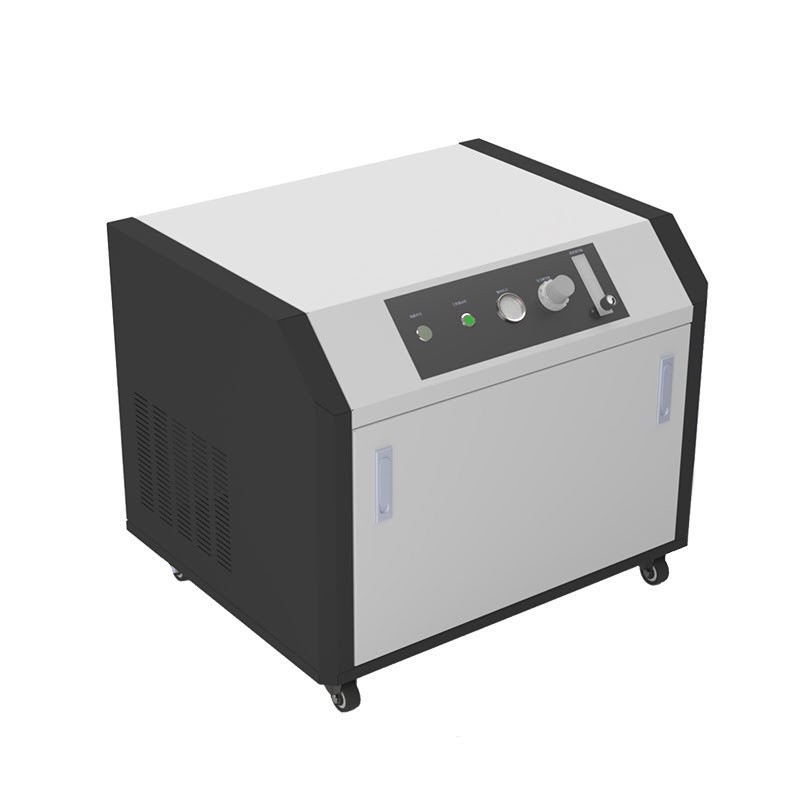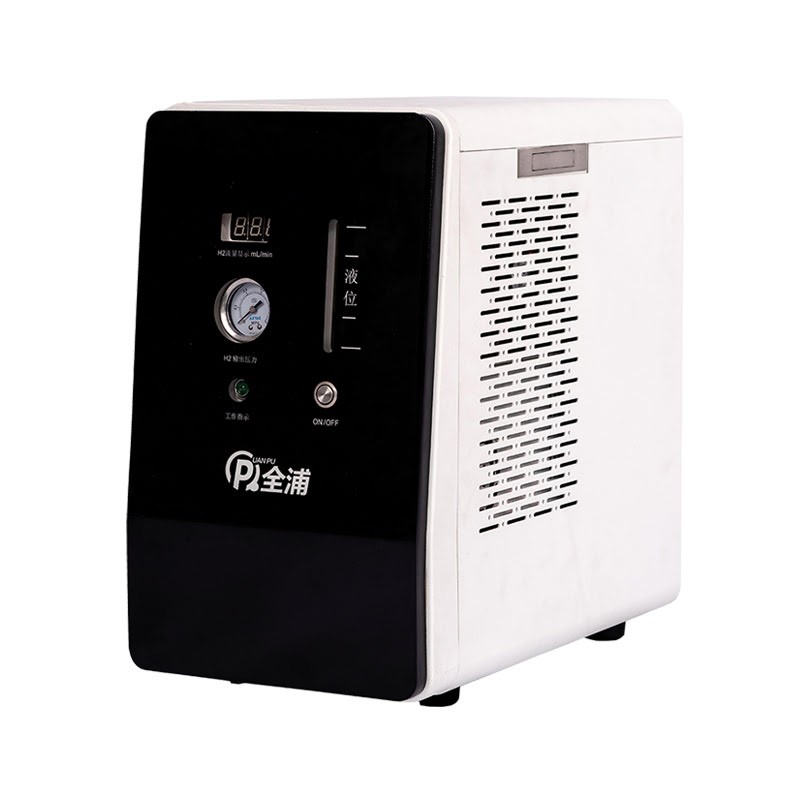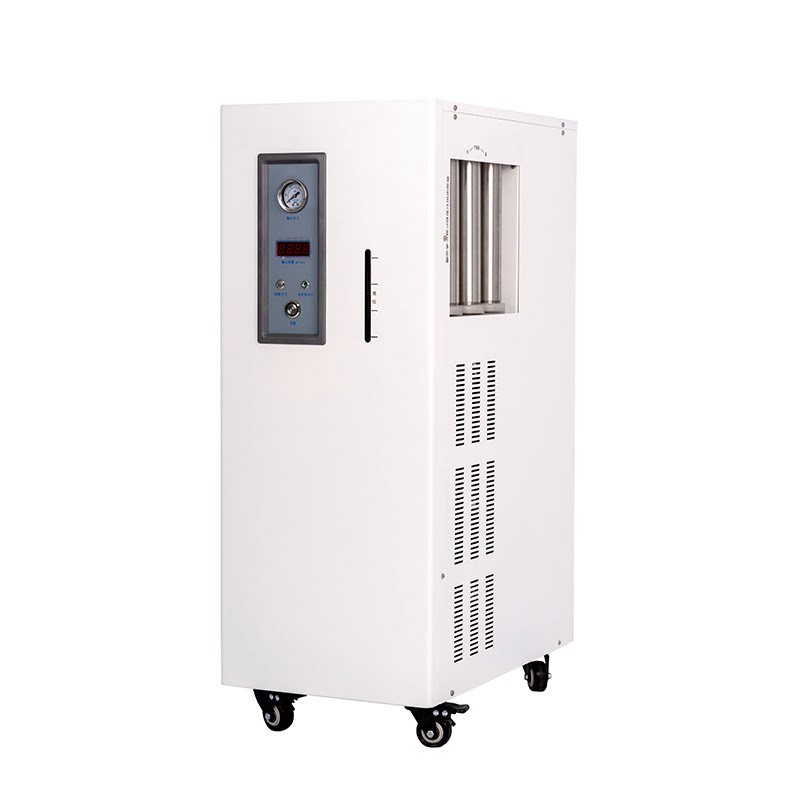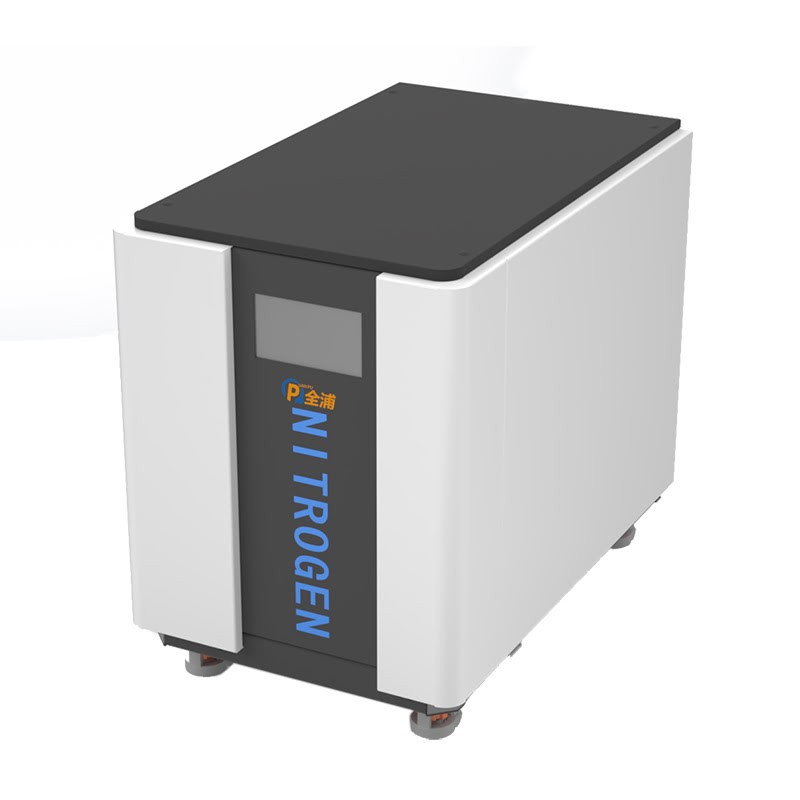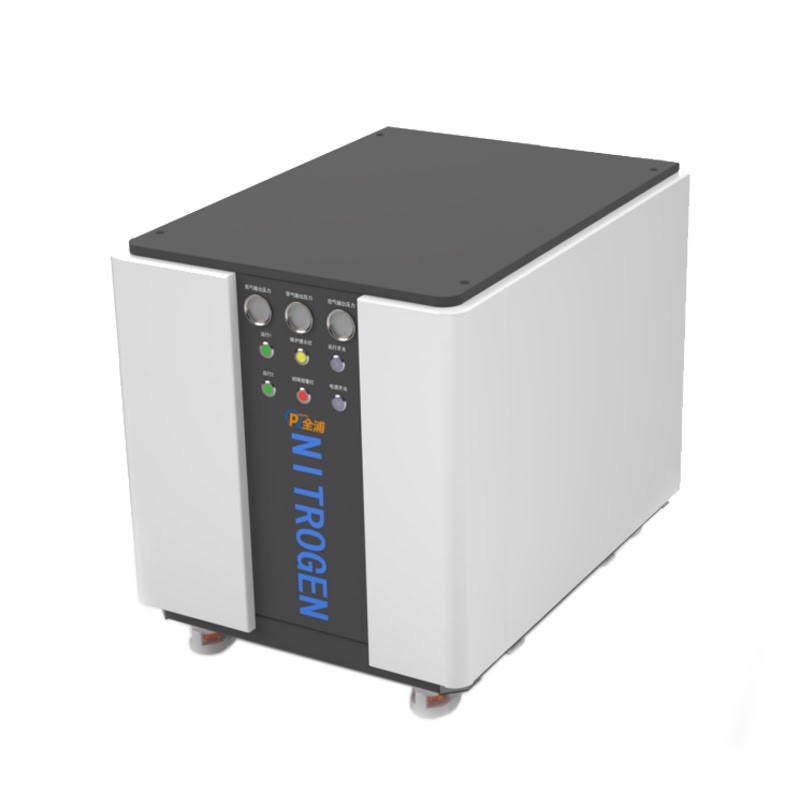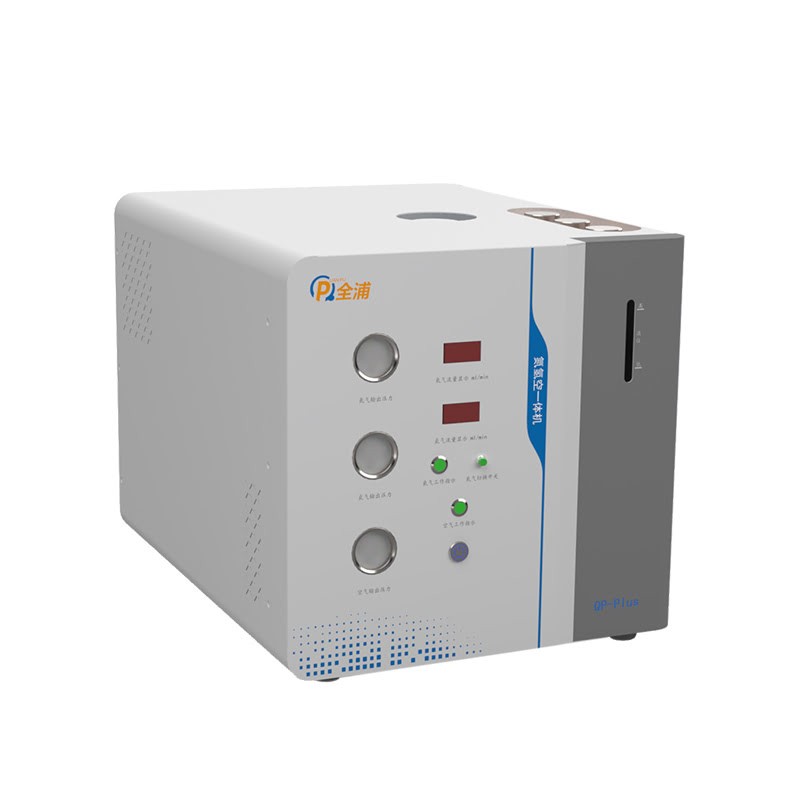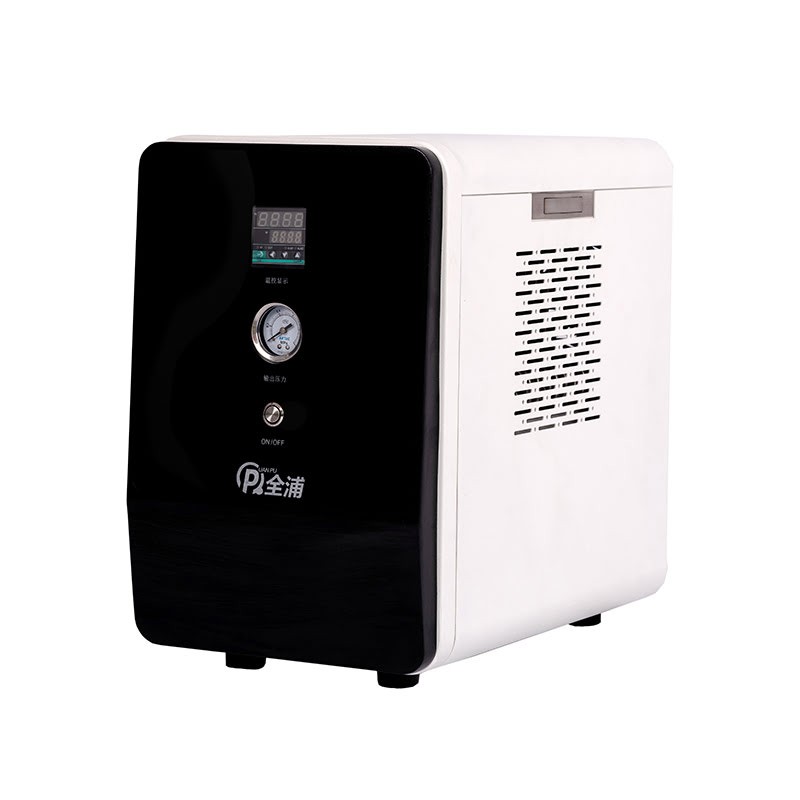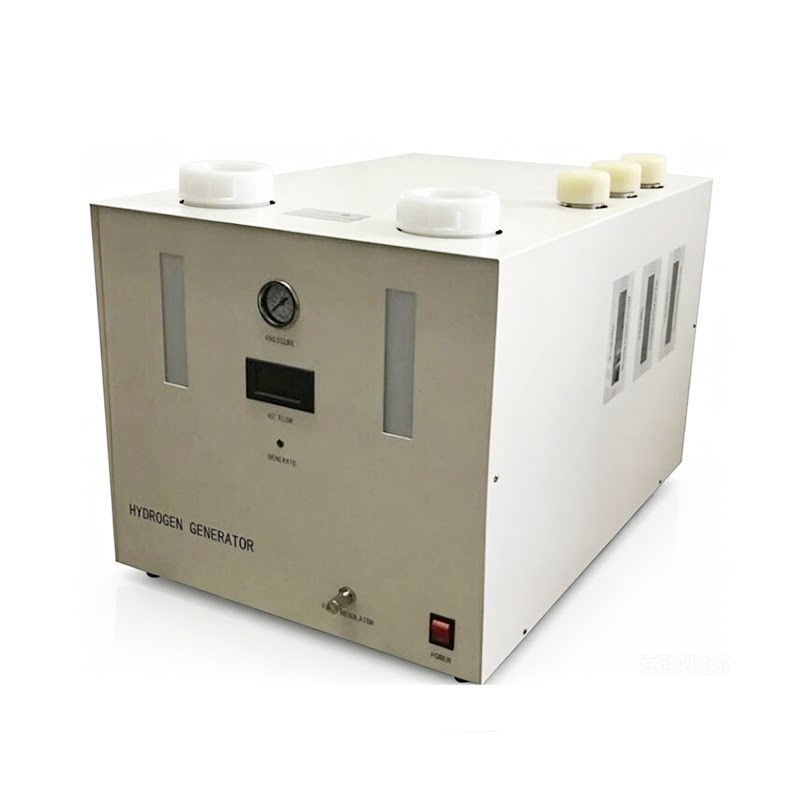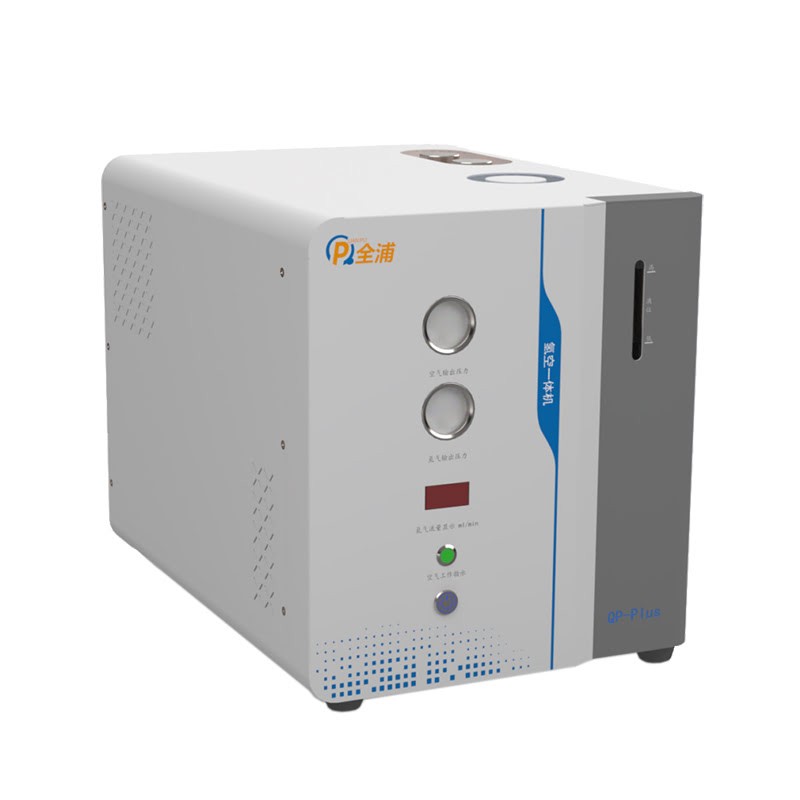
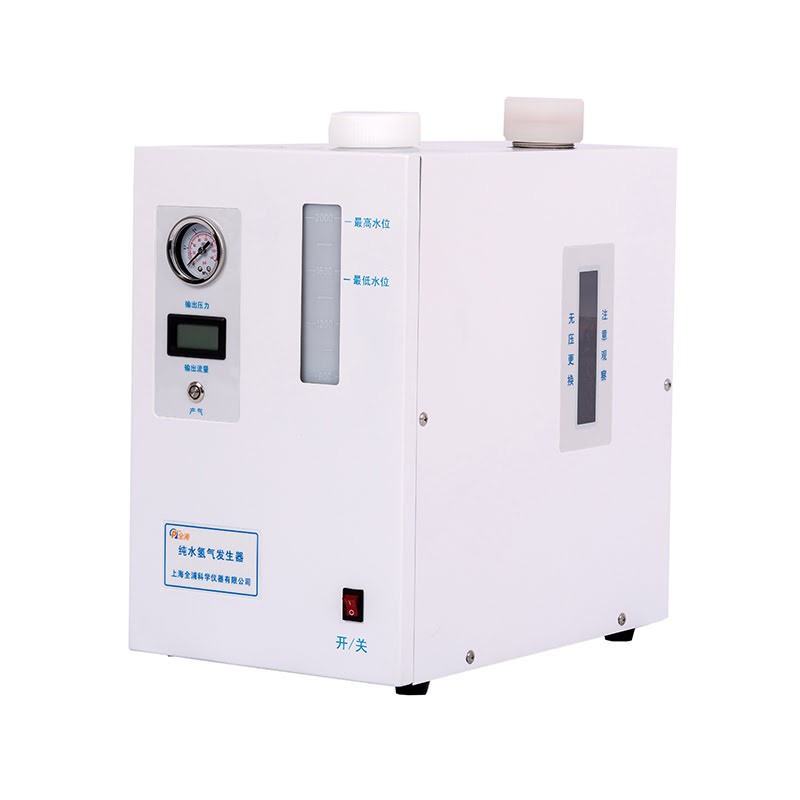
The electrolytic cell adopts the world’s advanced solid polymer electrolyte hydrogen production technology, which keeps the oxygen content in generated hydrogen below 0.1 ppm. It uses pure water as electrolyte and titanium metal as electrodes. After power-on, hydrogen is produced at the cathode and oxygen at the anode.
Oxygen is vented out, while hydrogen passes through a gas-water separator to remove moisture. After thorough drying via drying tubes, hydrogen is discharged from the gas outlet.This instrument is equipped with a high-sensitivity fuzzy automatic tracking control system.
It generates hydrogen only when gas is demanded and stops production when gas is not needed, realizing automatic constant pressure and constant flow.
The pressure stability accuracy is controlled within less than 0.001 MPa, ensuring the instrument delivers hydrogen with high purity, stable pressure, safe and continuous output.
| Instrument model | QPH-Plus-300C |
| Hydrogen purity | >99.999% |
| Maximum output flow | 300ml∕min |
| Output pressure | 0.4MPa |
| Pure water available | Deionized water or double-distilled water with a resistance greater than 2 MΩ |
| Maximum power | 200W |
| Pressure stability | <0.001Mpa |
| Power supply | 220V±10%﹔50HZ±5% |
| Overall dimensions | 350×220×340mm |
| Weight | Approximately 12 kg |
Combustion gas for FID, FPD and NPD detectors of gas chromatographs
High-purity auxiliary hydrogen for GC-MS instruments
Support gas supply for headspace samplers
Flame fuel gas for atomic absorption spectrometers (AAS)
Auxiliary gas for ICP elemental analyzers
Hydrogen supply for various trace element testing equipment
Scientific experiments of catalytic hydrogenation and material reduction
Teaching and analytical tests for environmental, food and chemical majors
Small-scale preparation experiments of nanomaterials
Detection of pollutants in water and soil
Pesticide residue analysis of pharmaceuticals and herbal medicines
Trace impurity testing of medical devices